Google has introduced the Pixel 11, Pixel 11 Pro and Pixel 11 Pro XL, using its new Tensor G6 processor to push more of the company’s Gemini-powered experience onto the phone itself.
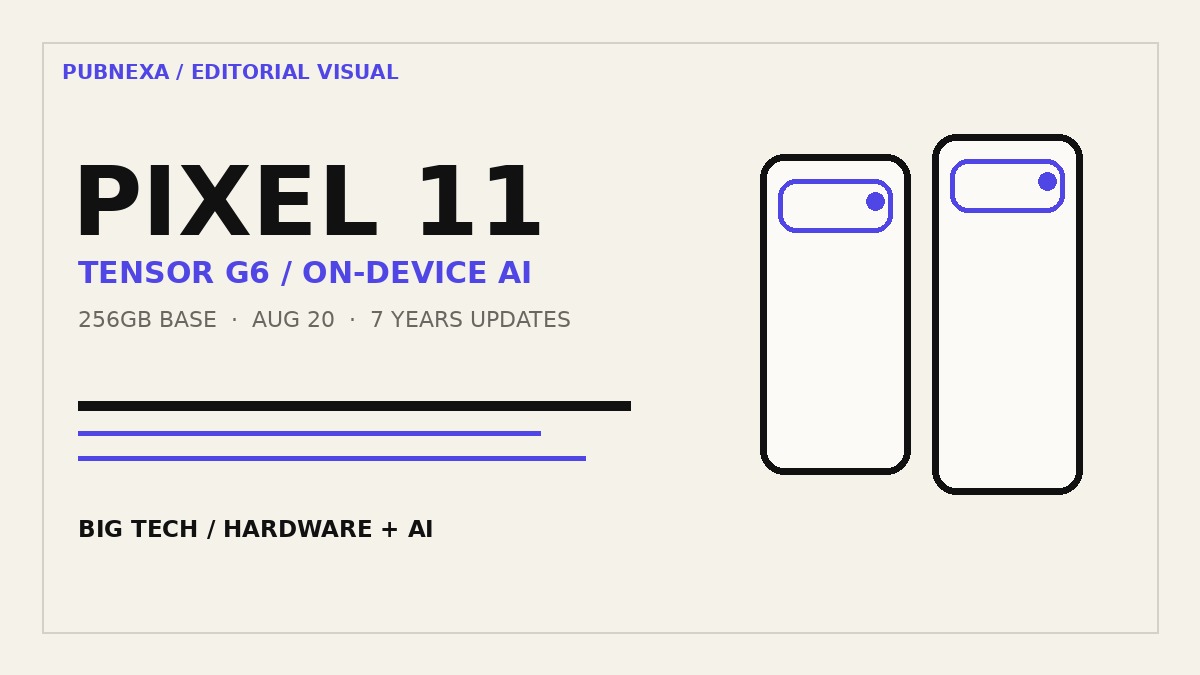
The lineup, announced August 12, combines a familiar Pixel hardware strategy with a stronger emphasis on local AI processing. All three phones begin with 256GB of storage, and Google lists starting prices of $899 for Pixel 11, $1,099 for Pixel 11 Pro and $1,299 for Pixel 11 Pro XL. The phones are scheduled to reach stores on August 20.
Tensor G6 is the technical center of the release. Google says the chip includes 50% more TPU compute than Tensor G5 and, when paired with the latest Gemini Nano model, can process on-device AI tasks up to 3.5 times faster while using up to 3.5 times less energy. Those figures are Google’s own performance claims and will need to be tested across real workloads and battery conditions.
The company is using that compute across the device rather than presenting AI as a single standalone feature. Google points to more proactive Gemini assistance, faster camera processing and local actions that can respond with lower latency. The Pro models also introduce HiLight, a colored LED system around the camera flash that can surface calls and Gemini status while the phone is face down.
The cameras received substantial hardware and software changes as well. The standard Pixel 11 gains a larger 48-megapixel main sensor and a 5x telephoto lens with up to 30x Super Zoom. Google says the Pro models can reach up to 120x Pro Zoom when their updated telephoto hardware is combined with Tensor G6 and the company’s imaging models.
The Associated Press independently confirmed the broader launch and Google’s continued effort to make AI a reason to upgrade Pixel hardware. AP also noted that the base storage has doubled to 256GB and that the new lineup raises entry pricing compared with the previous generation.
Google is also committing to seven years of operating-system, security and Pixel Drop updates for the new phones. That long support window matters because on-device AI features are likely to evolve materially over the life of the hardware, making software longevity part of the value proposition rather than a separate maintenance detail.